
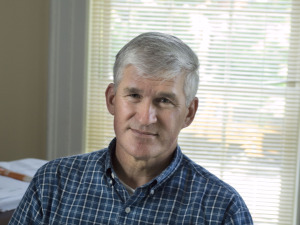
I have a lot to learn from a retired US Army Colonel who has been incredibly generous with his insight to students at Boston College and readers of his work at the Atlantic and in several books. I'm frustrated though, reading his 2008 article, because he has done so much to question harmful perversions of American institutions and perceptions but this article seems to be full of ghosts and tortured framing. I can't harmonize my respect for COL Bacevich's approach and this disappointing article.

http://www.theatlantic.com/magazine/archive/2008/10/the-petraeus-doctrine/6964/
COL Andrew Bacevich, US Army (Ret.) outlines how he sees a debate within the Army on the lessons of Iraq and the future of the force. The thoughtful and experienced Bacevich does not lack the credibility or the desire to improve the Army and it's use in Foreign Policy, after all he served a full career as an officer and has suffered great personal losses in the wars of the last decade. But experience and sacrifice are not enough to yield a sufficient explanation of the complex conversation occurring on how the US Army is adapting and changing.
Bacevich's argument here is essentially that he sees two camps within Army circles he calls Conservative and Crusader. He describes his conservative camp including Gian Gentile and Sean MacFarland, as protectors of an Army that does not wander from the core competency of conventional, force on force, land warfare. On the other side he describes a Crusader camp training and equipping a constabulary force for "societal transformation" wars.
This is a blunt approach to dismissing the more complicated conversation about concepts of how the Army will perform it's mission in the future. The Colonel's article neatly divides the problem in half, puts him on one side and GEN Petraeus on the other side and then goes to work describing a series of concepts that everyone agrees are bad ideas, conveniently attributing each one to his Crusader enemy. Unfortunately for Bacevich and his reader, there is no such crusader camp and simply describing a familiar sounding enemy, and them drawing a box around him does not help arrive at a better understanding of the situation, much less what to do about it.
Honestly at times I couldn't tell if he thought his Caped Crusaders were actually wrong in their assessments or wrong for telling anyone what they saw.
David Petraeus and John Nagl (Bacevich's foremost Crusaders) have written extensively about the force and the world (or the "COE" Contemporary Operating Environment as my Army describes it) in which it will have to operate. And understanding the world is difficult enough without short circuiting analysis with parochial preconceptions about the potential implications on force structure. The agility with which COL Bacevich Ph.D. turns some pretty accurate assessments of the conflict environment into full throated advocacies for another Vietnam is impressive conceptual Judo, but it's not a substantive critique of either their assessment or possible models for how to build a force that can operate in the world being assessed.
Instability creates ungoverned spaces in which violent anti-American radicals thrive. Yet if instability anywhere poses a threat, then ensuring the existence of stability everywhere—denying terrorists sanctuary in rogue or failed states—becomes a national-security imperative. Define the problem in these terms, and winning battles becomes less urgent than pacifying populations and establishing effective governance. -from the Bacevich Article
"Careful there Sarge, you tell 'em it's broke, they'll make you go on out 'n fix her."
Bacevich worries rightly that conventional capabilities and skills to fight big hard battles are being blunted in today's pace of deployment where irregular warfare missions like training the Afghan Army are falling to conventional units. But he then argues that language training and cultural competence, both essential for these missions, risk supplanting conventional battle skills like driving a tank. I don't really understand this mutually exclusive frame. Asking the Army to train great tank drivers, linguists and civil affairs experts is not the same as advocating that the same 19 year old do all three simultaneously in another Iraq. And saying that all this stuff reminds you of Vietnam does not make it so, and it doesn't help my generation of soldiers better understand what we are doing wrong in trying to address the huge institutional and conceptual voids in the transition space between war and peace.
COL Bacevich has made important points about imbalances in the force, imbalances in the Civil Military command relationship, imbalances in civilian oversight, imbalances in American perceptions of the utility of war to solve problems and many, many more. But this article is not a helpful example or a fair balancing of concepts. I will try to see the Colonel's vastly good contributions obscured behind this vastly unhelpful analysis.
Looking beyond the short form extrusion of his ideas, I want to think that he is trying to say some pretty reasonable things: the Army is being asked to do things that it is not very good at but that no one else is resourced to do; that there is a vast imbalance between a giant DOD budget and an anemic budget for diplomacy and non-military engagement in unstable places that lack strong capital cities; that you should force policy makers to make hard choices instead of putting the strain on a force that keeps shouldering huge burdens. I think I hear a more sub-surface argument between Bacevich's approach to changing the fundamental polity and approaches by folks like LTC Nagl and GEN Petraeus who are trying to fill the void in US capability within existing political frameworks. I don't know how that debate concludes, and maybe it never does but it is refreshing to have some legit dudes doing the hard thinking.


No comments:
Post a Comment